
Heard County Criminal History Checks
Heard County has no one-stop public criminal history portal. Start by defining the record: the jail answers current-custody questions, the arresting agency holds its narrative, Magistrate Court handles many warrants and first appearances, and the Superior Court clerk keeps felony prosecutions. GCIC is the statewide repository. A legal name, date of birth, name variants, approximate event date, arresting agency, and case or booking number help officials distinguish the right file.
The official county site provides the local agency directory. Its Heard County departments page shows why court, public-safety, and administrative records must be routed separately.
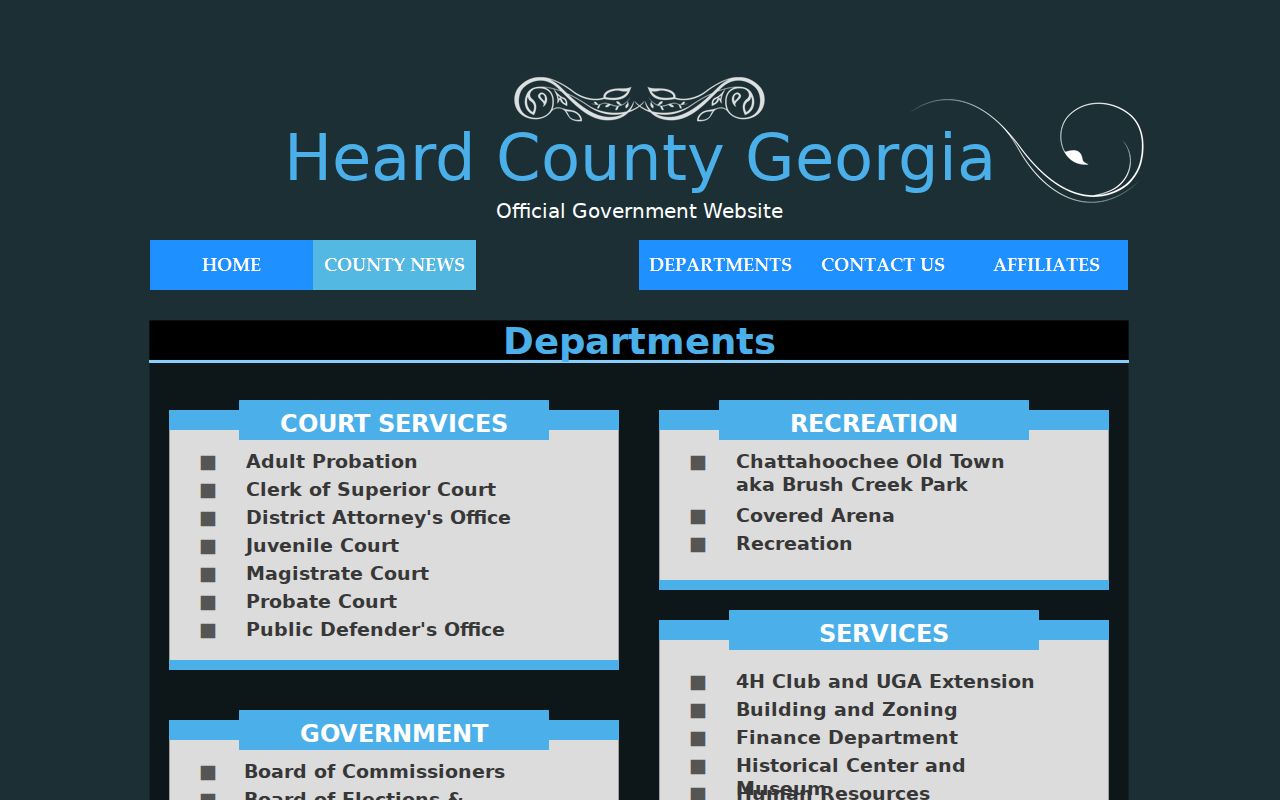
The directory is a starting map, not a combined search. Follow the record to the office that created or filed it.
- Call Heard County Jail at (706) 675-3329 for a recent booking, then identify the arresting agency.
- Ask that agency for its incident or arrest report, using the approximate date and location.
- Call Magistrate Court at (706) 675-3002 for warrant, bond, or first-appearance material.
- Ask the Superior Court clerk at (706) 675-3301 for the filed prosecution and final disposition.
- Use GCIC inspection for one's own fingerprint-supported Georgia history, or GAFS for its limited public felony-conviction slice.
Heard County's Three-Record Test
A booking entry, a court file, and a GCIC history are related but not interchangeable. The Highway 100 jail entry states what happened at intake. The East Court Square file records the prosecutor's later charges and the judge's result. GCIC links fingerprint-supported arrest cycles to reported dispositions. A booking charge may change before indictment, and a dismissal does not automatically remove every agency record.
Official Background Checks in Georgia
The Georgia Bureau of Investigation's Georgia Crime Information Center is the central repository. A personal inspection is the strongest state route for reviewing and challenging one's own fingerprint-linked history. The GCIC lobby at 3121 Panthersville Road in Decatur is appointment-only; call (404) 244-2639, option 1. Authorized fingerprint checks use Georgia Applicant Processing Service through IdentoGO. No official enrollment site was verified inside Heard County, so use the live locator before traveling.
GCIC's official program hub explains its record services, appointments, restrictions, and current fees.
Georgia Felon Search is narrower. It charges $15 even for a no-record result and reports a public slice of final Georgia felony convictions, not misdemeanors, non-conviction arrests, juvenile matters, out-of-state history, or restricted records.
| GAFS | $15 name-based public felony-conviction search; possible-match records can cost another $15 each. |
|---|---|
| GAPS Georgia only | $39.99 through GAPS on the 2025 GCIC schedule; program rules control eligibility. |
| GAPS Georgia plus FBI | $51.99 through GAPS on the 2025 GCIC schedule; qualifying program exceptions may apply. |
| GCIC own-record service | $10 with existing fingerprint cards or $25 when fingerprinted at GBI headquarters. |
East Court Square or Highway 100?
The courthouse and sheriff are not at the same counter. Felony case files belong with Clerk of Superior Court Tammy Teal at 215 East Court Square, Franklin. The clerk's office is open Monday through Friday, 8:30 a.m. to 5 p.m., at (706) 675-3301 or tteal@heardcountyga.com. The sheriff and 70-bed jail are at 11820 Highway 100 North, Franklin, at (706) 675-3329.
The official Superior Court clerk page supplies the case-file counter's contact details.
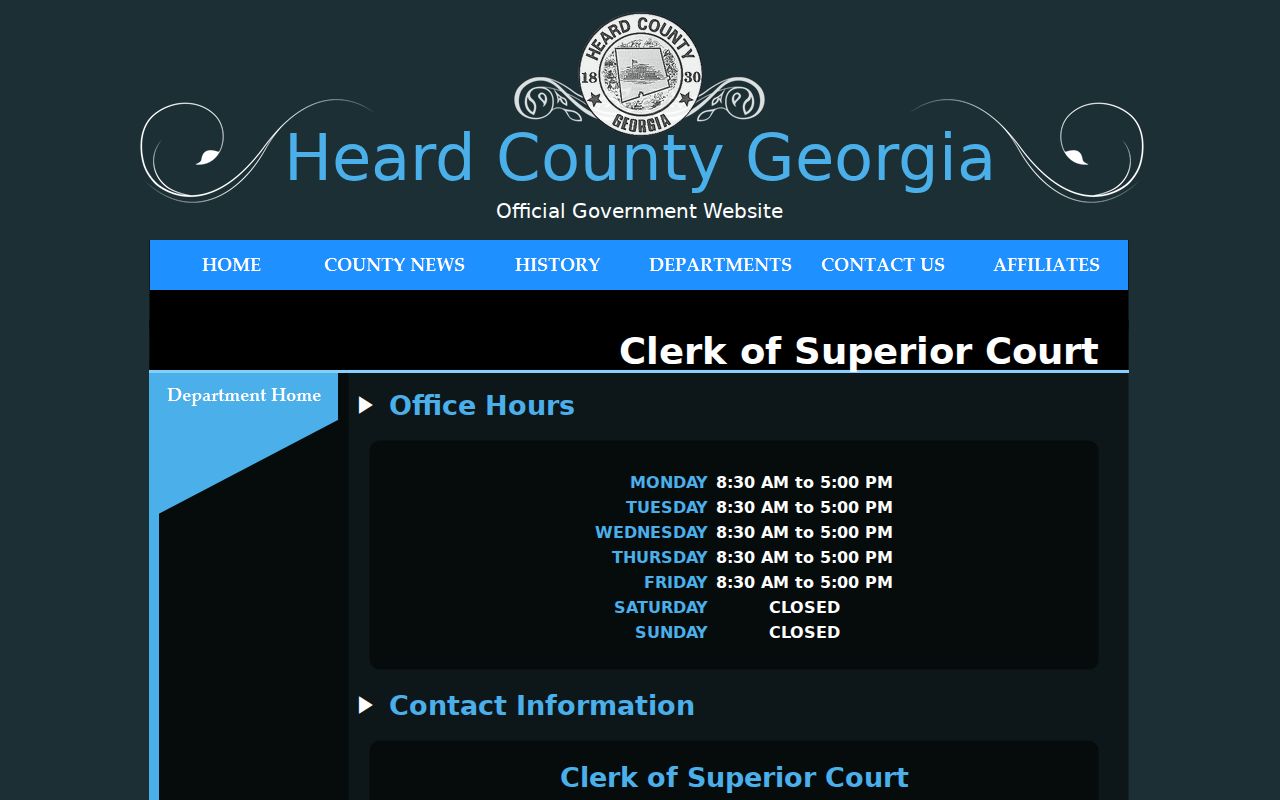
Call before a visit to ask whether a name search is available, which years are electronic, and what must be retrieved from an archive.
Kinds of Heard County Criminal Records
Each step creates a distinct Heard County record. An officer writes an incident or arrest report. Jail staff create a booking record. Magistrate Court may preserve an application, warrant, return, bond, and initial appearance. A prosecutor files an accusation or seeks an indictment, while the Superior Court clerk preserves the docket, pleadings, judgment, and sentence. State agencies then maintain reported history, prison, supervision, and registry data.
- Incident and arrest report: the arresting agency's account of the reported event and officer action.
- Booking record: the jail's intake, charges, bond, custody, and release events.
- Court case file: filed charges, hearings, orders, plea or verdict, disposition, and sentence.
- GCIC history: fingerprint-supported Georgia arrest cycles with reported outcomes.
- Custody and registry records: GDC state-offender data and the GBI/GCIC sex offender registry.
No Online Heard County Jail Roster
No official Heard County web roster, booking log, or inmate-profile interface was located. That absence does not make the booking record private. Call the jail at (706) 675-3329 with the legal name and approximate arrest date. Ask for the booking number, current charges, bond, arresting agency, custody status, and expected first-appearance information. If a field is not released by phone, submit a focused written request.
The official Heard County Sheriff's Office site confirms the local public-safety office and Highway 100 location.

For a state sentence, use GDC Find an Offender. Georgia VINE serves custody alerts. Neither replaces a current Heard County jail call.
Heard County Criminal Records: What They Contain
A record's fields reveal its purpose. A GCIC history centers on identity, aliases, SID and FBI identifiers, arrest cycles, agencies, charges, tracking numbers, and reported dispositions. A Heard County court file centers on its case number, filed charge, docket, hearings, counsel, bond, plea or verdict, judgment, sentence, fines, and documents. A jail entry centers on intake, custody, and release.
| Name & identifiers | Legal name, aliases, birth data, physical descriptors, SID, FBI number, case number, or booking number. |
|---|---|
| Arrest and booking | Arrest date, agency, intake time, arrest charge, warrant, bond, facility, and release event. |
| Charges and statutes | Booked allegations or later filed counts, with Georgia code references where reported. |
| Disposition | Dismissal, nolle prosequi, no bill, acquittal, plea, verdict, or another charge-level result. |
| Sentence | Custody, probation, fines, costs, restitution, and special terms stated in the judgment. |
| Custody or supervision | Local jail status, GDC institution, state sentence, or published supervision information. |
Heard Magistrate Records Before a Felony Case
Magistrate Court can hold material that never becomes a Superior Court felony prosecution. Its records may include officer or citizen warrant applications, warrants, first-appearance work, bond matters, and county ordinance proceedings. A 2026 county clerk recruitment notice says the office scans records into a Magistrate Management System, prepares calendars and criminal caseload reports, and provides certified copies.
The Heard County Magistrate Court page is the official starting point for that local channel.
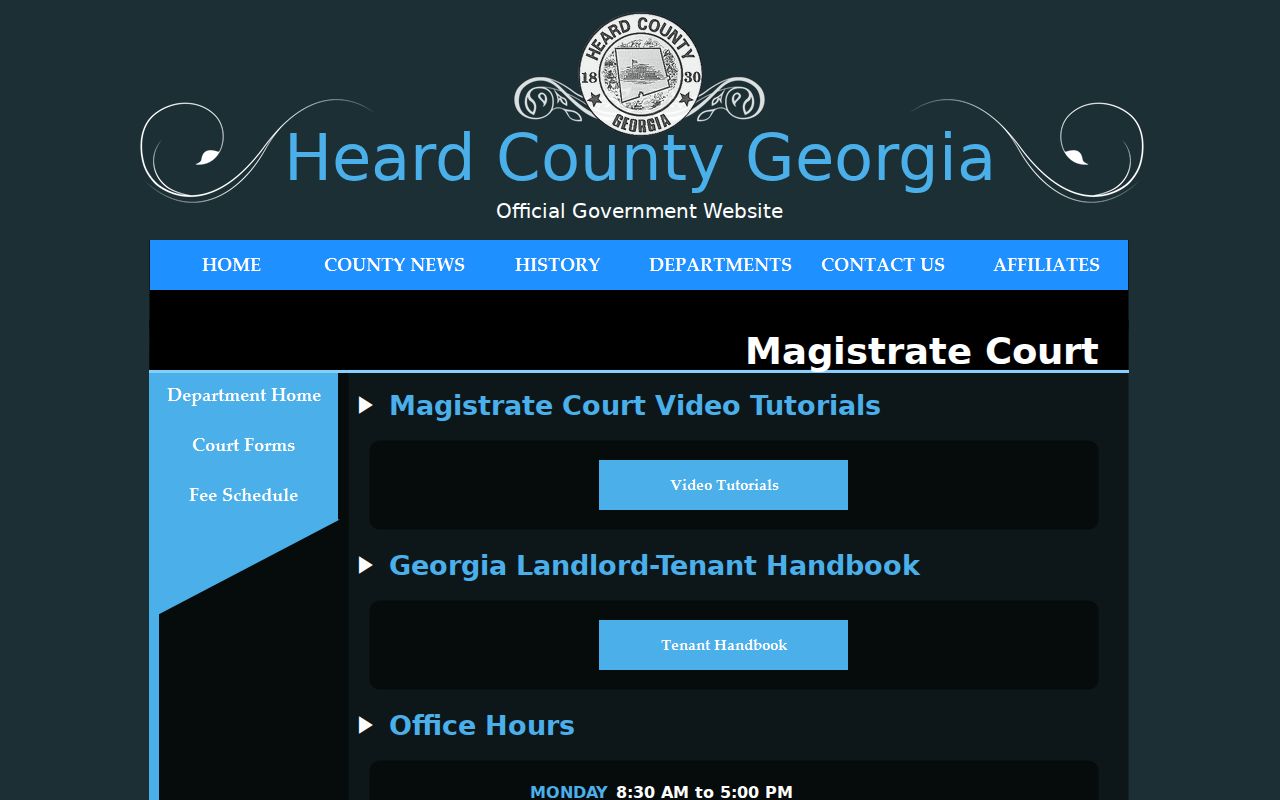
Call (706) 675-3002 and identify the person, approximate date, type of warrant or hearing, and any known case number.
Georgia Public Access Laws
Georgia law favors access to public agency records but recognizes specific exemptions. Ask the sheriff for sheriff-created incident, arrest, or booking material and the clerk for filed judicial records. A written Georgia Open Records Act request is an executive-agency fallback. Court clerks may use court-record procedures instead. Active investigative supplements, juvenile files, protected victim data, medical information, security details, and sealed material may be withheld or redacted.
Key Statutes:
O.C.G.A. § 50-18-70 states Georgia's policy of public access, subject to lawful exemptions.
O.C.G.A. § 50-18-71 governs inspection, copying, response, and permissible charges.
O.C.G.A. § 35-3-35 governs criminal-history dissemination, including public felony-conviction information.
O.C.G.A. § 35-3-37 provides correction, record restriction, and court-sealing routes.
O.C.G.A. § 42-1-12 establishes registry and sheriff verification duties.
Requesting Heard County Sheriff Records
The sheriff publishes an Open Records Request form. Submit it in person during normal business hours, mail it to Open Records Request, Heard County Sheriff's Office, P.O. Box 339, Franklin, GA 30217, or email Chief Deputy Captain Jane Olinger at jolinger@heardcountyga.com. The form asks the requester to wait at least three business days after the incident and calls for a name, mailing address, telephone, date range, record description, delivery choice, signature, and date.
| Incident or arrest report | No published fixed fee; request an estimate from the sheriff custodian. |
|---|---|
| Booking or jail record | No published fixed fee; ask jail records at (706) 675-3329. |
| Superior Court copy | No published copy or certification fee; call (706) 675-3301. |
| Magistrate copy | The 2025 civil schedule states $0.50 per page and $14 for a certified copy or order; confirm criminal applicability. |
Search and retrieval labor may be charged after the first 15 minutes at the rate of the lowest-paid qualified employee. The sheriff provides a time and cost estimate when records cannot be produced at once.
Restricted, Sealed & Record-Restricted Records
Georgia calls the main relief process record restriction. It limits general dissemination of an eligible GCIC arrest cycle but does not destroy every underlying agency file. After restriction, O.C.G.A. § 35-3-37(m) permits a court-sealing request when statutory harm and public-interest tests are met. Criminal-justice agencies may retain lawful access, and juvenile records follow separate confidentiality rules.
Start with the arrest date, arresting agency, OTN, charges, and a certified final disposition. Pre-July 1, 2013 arrests commonly use the GCIC restriction form through the arresting agency and prosecutor. For a newer eligible case that remains visible, first confirm that the disposition reached GCIC. A dismissal alone does not guarantee restriction.
Heard Jail, Georgia VINE, and GDC
These custody channels answer different questions. Heard County Jail covers current local detention and short local custody. Georgia VINE can provide custody-status notifications. GDC Find an Offender covers published state-sentenced custody and supervision, not a fresh pretrial booking. Search GDC by GDC ID or case number when known, or narrow a name with first name, middle name, alias, gender, race, and age range.
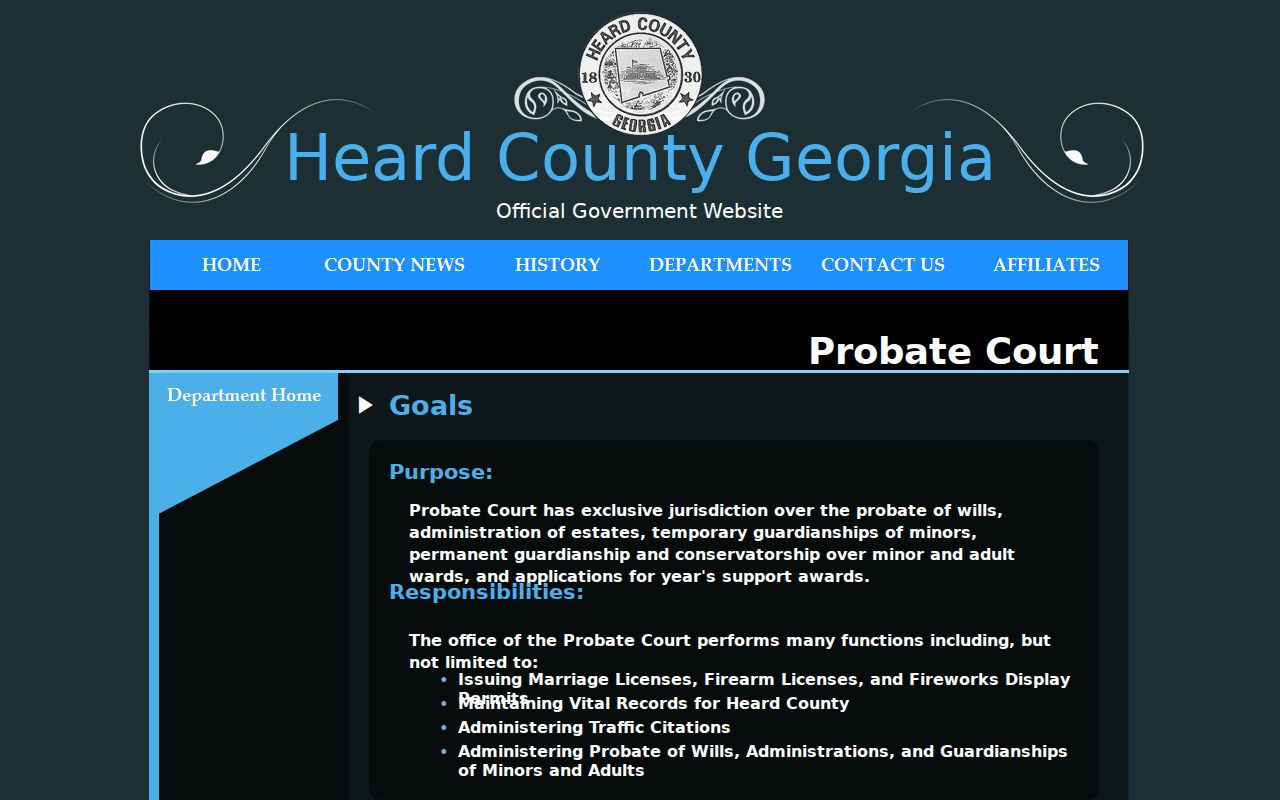
Heard County's Probate Court page also identifies the local traffic and probate channel where jurisdiction applies.
Do not infer that a person has no record because one custody system returns no match. The event may be local, released, restricted, misspelled, or not yet reported.
City-by-City Criminal Records in Heard County
Heard County has three incorporated municipalities. Franklin has documented police and municipal-court channels, while official research did not establish standalone police or live court-search systems for Ephesus or Centralhatchee. The issuing agency and citation are therefore crucial. County jail, Magistrate Court, and Superior Court routes remain important when a city event moves into county custody or state prosecution.
Franklin Record Check
2024 estimate: 980 · Separate police and municipal-court channels are documented.
Ephesus Record Check
2024 estimate: 496 · Confirm the issuing agency, then use sheriff and county courts.
Centralhatchee Record Check
2024 estimate: 363 · City Hall can confirm current municipal-court administration.
One Heard County Justice Hub, Several Counters
Heard County covers about 296 square miles, while countywide justice offices remain concentrated in Franklin. The Census Bureau estimated 12,149 residents in 2025. That rural setting makes phone, email, and TTY 711 access important, especially for residents outside the seat. It also makes the difference between Park Avenue, East Court Square, and Highway 100 a practical part of any records plan.
The official Heard County homepage anchors the county's current service directory and notices.

The courthouse returned to service after renovation in 2020, and the county warned that old and new phone directories differed. Use live department pages rather than an old saved number.
Warrants, Reports, and Supervision in Heard County
No public Heard County active-warrant database was found. The official fallback has four parts: call the sheriff at (706) 675-3329, ask Magistrate Court about county warrant and first-appearance records, contact Franklin Municipal Court about a city bench warrant, and inspect the related Superior Court file for a capias or court-issued warrant. A warrant can be sealed, quashed, served, or recalled after an old reference was created. Confirm the issuing court, current status, bond, and safe reporting instructions before acting on stale information.
Police and incident reports remain agency-specific. Heard deputies, Franklin officers, state troopers, GBI agents, and DNR officers keep the narratives their own personnel create. A focused request states the incident number if known, date and time, place, record type, and preferred format. Ask separately for the initial report, investigative supplements, 911 or CAD records, photographs, and body-camera video because those items may have different custodians, retention periods, redactions, and reproduction costs.
A court judgment is the best public source for whether probation was imposed. Georgia Department of Community Supervision handles state felony probationers and parolees, while the State Board of Pardons and Paroles makes parole decisions. Heard County also lists Adult Probation at 215 East Court Square, (706) 675-3321. Operational supervision notes are not a public tracking dossier. Verify a sentence through the court file and use GDC only for the state fields it publishes.
Georgia does not place every felony into a universal letter-grade system. The offense statute controls the range. A misdemeanor generally carries up to 12 months and a fine up to $1,000, while a misdemeanor of a high and aggravated nature can carry a fine up to $5,000. Superior Court handles felonies. Authorized lower courts handle misdemeanors, traffic matters, and ordinances within their jurisdiction. A booking label alone is not enough to determine the final grade or sentence.