
Criminal Court Cases in Heard County
Heard Superior Court is the county's felony trial court and court of general jurisdiction. The Clerk of Superior Court keeps its public criminal dockets and filed case papers at 215 East Court Square in Franklin. Magistrate Court handles warrant applications, first appearances, bond issues, and county ordinance matters. Probate Court has traffic and other statutory probate jurisdiction. Franklin Municipal Court keeps city ordinance and qualifying traffic or misdemeanor matters. Juvenile Court is a Superior Court division, but delinquency files are confidential except where Georgia law permits access.
Start by identifying the charge and issuing agency. A warrant file at Magistrate Court is not the later Superior Court prosecution. Likewise, a city citation may stay in Franklin Municipal Court. The official Magistrate Court page and the Superior Court clerk page provide the local routes. Ask the clerk to confirm jurisdiction before ordering copies.
Heard County Felony File Counter
The Superior Court clerk is the practical source when no complete county web search exists. The office is at 215 East Court Square, Franklin, GA 30217. Call (706) 675-3301, Monday through Friday from 8:30 a.m. to 5:00 p.m. Mail may go to P.O. Box 249, Franklin, GA 30217. The published fax is (706) 675-6138, and the email is tteal@heardcountyga.com.
Provide a full name, an approximate filing year, and a case number when known. Ask for the docket sheet first. It is the compact index of events and helps identify which accusation or indictment, plea, judgment, sentence, or final disposition is worth copying. For an older Heard County criminal case, ask whether archive retrieval adds time and whether the office accepts a mailed request and prepayment. Certification can cost more, so request a certified copy only when the receiving office requires one.
The clerk and sheriff are not in the same building. Felony court files are at East Court Square, while arrest and jail records begin at the Highway 100 sheriff complex. Calling first avoids a trip to the wrong custodian. County material also places Magistrate Court in Room 200 at 201 Park Avenue, though other directories group court services near East Court Square. Confirm the counter location before travel, especially for a warrant or first-appearance file.
Heard County Case Record Searches
The Georgia Judicial Gateway routes users toward participating court systems, but it is not one complete statewide criminal docket. Georgia's E-Access directory routes Heard Superior Court to PeachCourt, where an account and the participating court's access rules apply. Clerk assistance remains the reliable fallback.
- Decide whether the record belongs to Superior, Magistrate, Probate, Municipal, or Juvenile Court.
- Gather the party's full name, approximate filing year, and case number if available.
- Call the correct Heard County clerk and ask the clerk to confirm a matching docket.
- Review the docket dates, counts, and disposition entries before selecting documents.
- Request plain or certified copies and confirm price, delivery method, and archive time.
| Search detail | How it helps | Availability | Best use |
|---|---|---|---|
| Full party name | Locates likely files | Give to clerk | Name search |
| Case number | Identifies one docket | Best identifier | Direct lookup |
| Filing year | Narrows common names | Approximate is useful | Archive search |
| Court or case type | Routes the request | Confirm first | Jurisdiction check |
| Date of birth | May help distinguish names | Ask clerk if used | Identity check |
Heard County PeachCourt Limits
Heard Superior Court appears on Georgia Courts' mandatory e-filing participation chart. That fact does not turn PeachCourt into a complete, free public name search. E-filing describes how documents reach a participating court. Public viewing still depends on the court, account controls, document status, and clerk procedures. No private case was opened during the research, so unverified search controls are not promised here.
The distinction matters. A reader can find no result online even though a paper or clerk-indexed Heard County case exists. Name variants, older files, a different court, restricted access, and documents that are not exposed remotely can all explain the gap. Call the clerk rather than treating silence from a routed portal as proof that no prosecution occurred.
What a Criminal Case File Contains
A Heard County criminal court file tracks the prosecution, not just the arrest. Each count may have its own outcome, so read the charge line beside its disposition. The docket may also point to documents that are public only after protected details are redacted.
| Case number and court | Identifies the docket, division, filing date, and assigned judge when shown. |
|---|---|
| Charging document | Shows an accusation or indictment, statute, count, and charge as formally filed. |
| Docket entries | List motions, orders, attorney appearances, hearings, and filing dates. |
| Bond and warrants | May show bond terms, a bench warrant, capias, service, or later recall. |
| Disposition and judgment | Records a dismissal, nolle prosequi, plea, verdict, acquittal, or other outcome by count. |
| Sentence and conditions | May state confinement, probation, fines, costs, restitution, and concurrent or consecutive terms. |
A booking charge can differ from the filed charge. The court disposition is the better source for the result, while a certified copy carries the clerk's authentication when formal proof is needed.
Heard County Dispositions in Plain Terms
An accusation is a prosecutor's charging paper used for many matters that do not proceed by indictment. An indictment is returned by a grand jury as a true bill. A no bill means the grand jury declined to indict. Nolle prosequi means the prosecutor formally chose not to continue that charge at that time. A dismissal also ends a charge without conviction, while an acquittal follows a not-guilty verdict.
Disposition means the outcome assigned to a charge. One Heard County case may carry several counts and several results. Do not apply one outcome to the entire file without checking each count. A capias is a court command to take a person into custody, often tied to nonappearance. It may be visible as a docket event, but current status should be confirmed with the issuing court.
Criminal Case Stages in Heard County
A local case may begin with a warrant or arrest, but prosecutors decide what formal charges move forward. Felony charges may proceed through a grand jury or another authorized Georgia charging route. Arraignment is the hearing where the filed charges are stated and a plea is entered. Discovery, motions, and negotiation follow before a plea or trial. Judgment and sentencing come after the result.
Case flow: Charges Filed › Arraignment › Pretrial › Plea or Trial › Disposition › Sentencing
The docket can continue after sentencing through a direct appeal or post-conviction proceeding. For the arrest and jail trail that precedes filing, the county's Arrest Search explains which office created each record.
Heard County's New Court Circuit
On January 1, 2025, Heard County joined Carroll County in the West Georgia Judicial Circuit. Older county material may still refer to the Coweta Circuit. That does not move Heard felony files away from the local clerk. The change affects the circuit identity and prosecution framework, while the Clerk of Superior Court remains the point for Heard County dockets and copies.
The West Georgia Judicial Circuit District Attorney prosecutes felony matters. The county directory lists the local DA office at (706) 675-0955. The Public Defender's Heard satellite is at 215 East Court Square, Suite 4099, with telephone (706) 675-0288. Neither office substitutes for the clerk as public-record custodian, and confidential defense files are not public court records.
Federal Cases Affecting Heard County
Federal prosecutions are not stored in Heard Superior Court. Heard County lies in the Northern District of Georgia. Search those dockets through the federal PACER system and PACER Case Locator, which require an account and may assess current judiciary usage fees.
The official PACER homepage explains access to federal records.
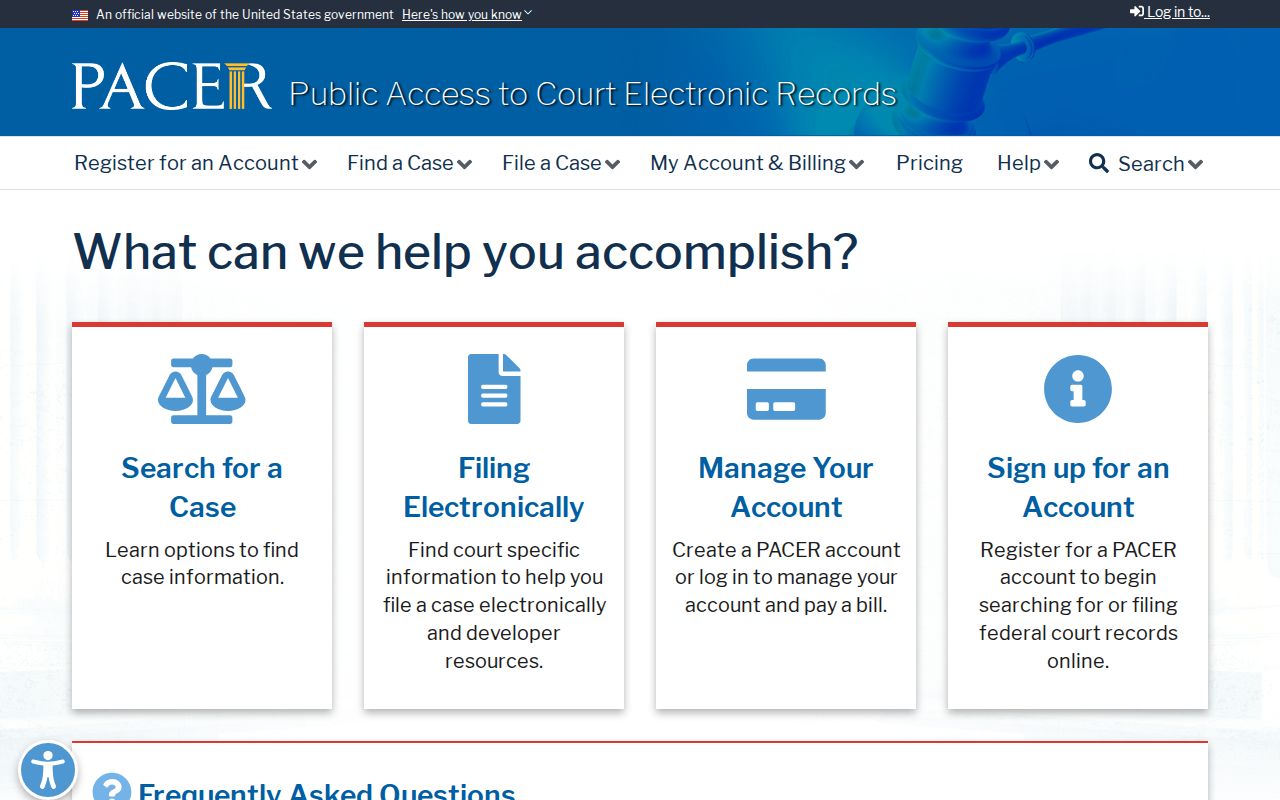
PACER separates federal cases from Heard County's state and local court channels.
The PACER Case Locator searches federal courts by party and case identifiers.
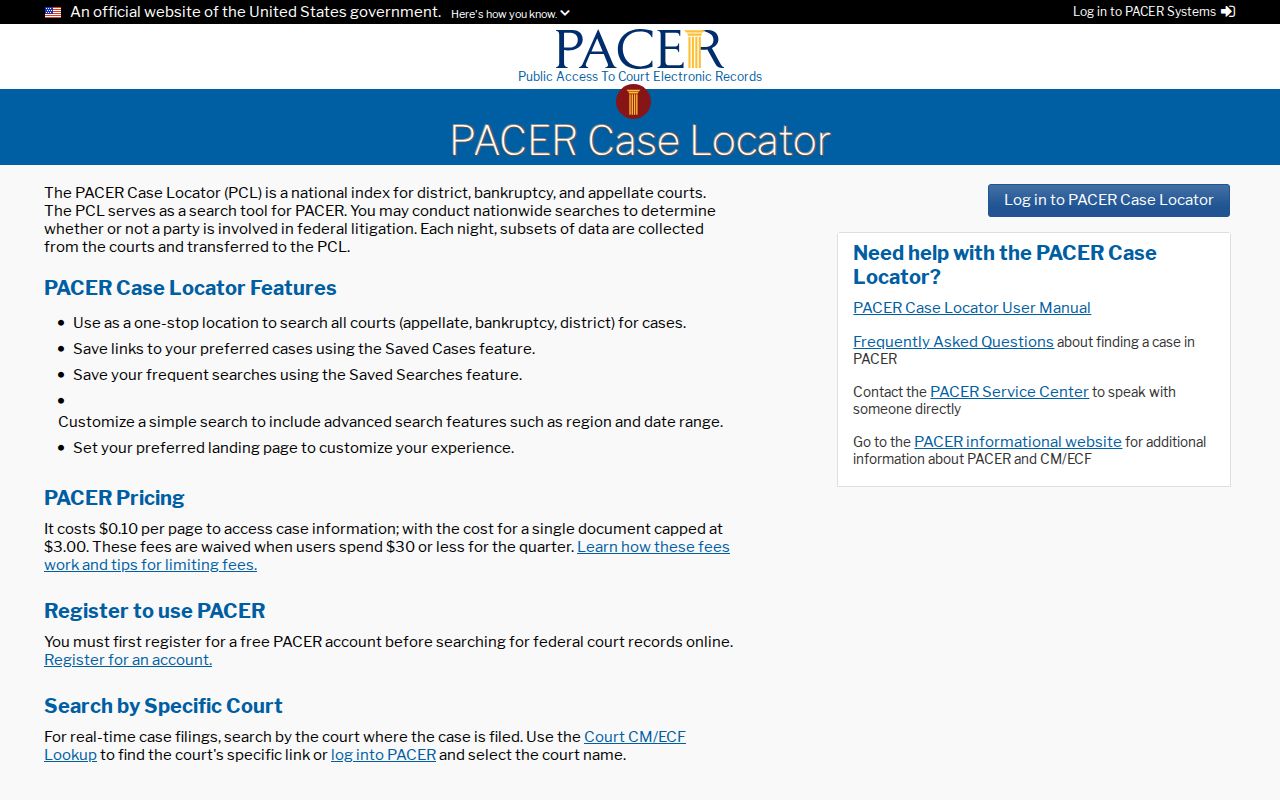
Use the locator to identify the district and case number before opening docket documents.
The Northern District of Georgia publishes its current court and filing information.
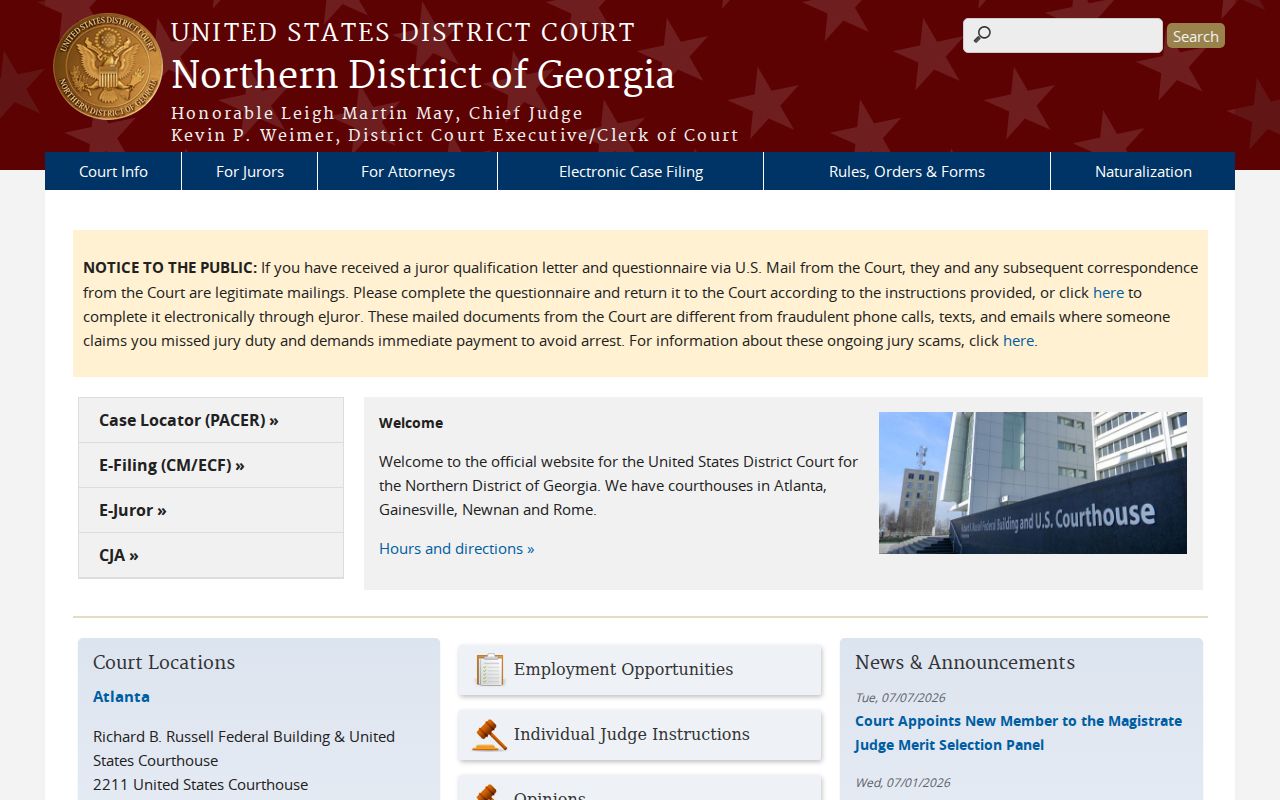
Its official site should be checked before travel because federal venues and instructions are separate from the Franklin clerk counter.
Access Rules for Case Records
Georgia law generally favors access to public records, but court files can contain protected material. Juvenile cases, victim and minor identities, Social Security numbers, financial account data, medical details, and sealed or restricted records may be withheld or redacted. O.C.G.A. § 15-1-10.1 addresses electronic court-record administration, while local clerk practice and Judicial Council standards still govern access details.
A Georgia Open Records Act letter is useful for executive-agency records. Judicial records may instead follow court-specific clerk procedures. If an expected Heard County criminal case is absent, ask whether it is indexed under a different name, stored in an archive, pending entry, held by another court, or subject to restricted access. A dismissal does not itself erase every court or arrest record. Eligible people may pursue Georgia record restriction and, where allowed, a separate court sealing request under O.C.G.A. § 35-3-37.
When only part of a document is protected, the clerk may provide a redacted copy rather than withhold the whole file. Ask what can be inspected at the counter, what can be sent, and whether an order sealing the record controls access. Court-file restriction and GCIC dissemination are related but are not the same process.