
Arrest Records in Heard County
The Heard County Sheriff's Office, Franklin Police Department, Georgia State Patrol, GBI, Georgia Department of Natural Resources officers, and other authorized agencies can make arrests in the county. Ephesus and Centralhatchee have no clearly documented full-service police departments in the official sources reviewed. Confirm the arresting agency rather than assuming the sheriff wrote every narrative.
An arrest produces connected but distinct records. The officer creates the incident or arrest report. Heard Jail creates booking and release data. Magistrate Court may create a warrant, initial-appearance record, and bond order. A prosecutor and the appropriate court later create the filed charge and disposition. Fingerprints for qualifying charges flow toward the Georgia Bureau of Investigation's Georgia Crime Information Center. None of these records, standing alone, states the whole result.
No Heard County Booking Portal
No official public jail roster, daily booking log, or inmate-profile search was located for Heard County. That absence does not mean booking records are unavailable. Call Heard Jail at (706) 675-3329 with the legal name and approximate arrest date. Ask whether the person is currently booked, the booking number, arresting agency, current booking charges, bond, and expected first-appearance information.
If staff will not release a field by phone, request the booking record in writing. Current custody is only one slice of arrest history. A person who has bonded out, transferred, or been released may no longer be confirmed in a current-status call. Georgia VINE can provide custody-status alerts, but it is not a complete arrest archive. GDC Find an Offender begins to help after a state sentence or transfer, not at local intake.
Heard County Arrest Lookups
A channel-complete lookup begins with the jail and then follows the record to the office that owns each part. Keep the legal name, event date, location, agency, and any booking, incident, warrant, OTN, or case number together.
- Call Heard Jail at (706) 675-3329 to confirm current booking status and obtain the arresting agency.
- Request the narrative or initial arrest report from that agency, using the sheriff's official form when HCSO holds it.
- Contact Magistrate Court at (706) 675-3002 for warrant, first-appearance, or bond records.
- After filing, ask the correct court clerk for charges and disposition; Superior Court felony files use (706) 675-3301.
- Use GCIC inspection, Georgia Felon Search, GDC, or VINE only for the narrower statewide purpose each system serves.
- Send a written Georgia Open Records Act request when phone access does not produce the public booking or arrest report.
This sequence separates custody, probable-cause narrative, court filing, and statewide criminal history. A no-result response from one office does not cancel a record held by another.
Heard County Sheriff Record Requests
The Sheriff's Office is at 11820 Highway 100 North, Franklin, GA 30217. Its official two-page Open Records Request form may be submitted in person during normal business hours, mailed to Open Records Request, Heard County Sheriff's Office, P.O. Box 339, Franklin, GA 30217, or emailed to Chief Deputy Captain Jane Olinger at jolinger@heardcountyga.com. The form says to wait at least three business days after the incident before requesting.
Name the exact record. An incident report, booking report, jail log, 911 or CAD record, body-camera video, photographs, and warrant return may have different custodians and access limits. Provide the incident or booking number, date range, location, agency, preferred format, certification need, and a maximum cost. The office may charge permitted search, retrieval, copying, and supervised-inspection costs. After the first 15 minutes, labor uses the lowest-paid qualified full-time employee. No local per-page report fee was published.
Heard County Sheriff and Jail
11820 Highway 100 N
Franklin, GA 30217
(706) 675-3329
Jail administration: Mon-Fri, 9-5
Arrest Records: What They Contain
A booking profile describes intake and custody. Availability must be confirmed because protected details and security data can be withheld. Ask for the fields needed to match the event, then compare the charges with the later court file.
| Booking number | Local identifier for the intake record and a strong key for follow-up requests. |
|---|---|
| Booking date and time | Shows when jail intake occurred, which may differ from the arrest time. |
| Arresting agency | Identifies who owns the officer narrative and related incident material. |
| Charges and warrant | Lists booking allegations, codes, and a warrant number when recorded; charges can later change. |
| Bond | May show amount, type, status, court, and separate terms for each charge. |
| Booking photograph | May be part of the official file, but Heard County publishes no online mugshot gallery. |
| Release status | May state current custody, release date and time, transfer, or release reason. |
Medical flags, suicide-watch data, housing details, protected personal identifiers, and security-sensitive information should not be presumed public. Requesters may receive redactions.
A Heard County Arrest's Record Trail
At intake, jail staff confirm identity and authority to hold, inventory property, perform health and safety screening, photograph and fingerprint the person, enter charges and warrants, and assign housing. Fingerprintable charges receive tracking identifiers for submission toward GCIC. A judicial officer then handles the prompt initial appearance and bond questions. Release may follow bond, court order, transfer, sentence completion, or dismissal.
Record flow: Officer Report › Heard Jail Booking › OTN and Fingerprints › Magistrate Review › Prosecutor Filing › Court Disposition › GCIC Update
The OTN, or offense tracking number, helps link the arrest cycle with its reported court result. A SID is the state identification number tied to fingerprint identity. Gaps can occur from name variation, reporting lag, a non-fingerprintable event, or a disposition that has not yet reached the state record.
Bond is set by a judge, not the sheriff. Heard County accepts cash, qualifying property, and approved professional bonds under local rules. Payment form and property paperwork vary by time and bond type. A reader checking an arrest record should treat the stated bond as a snapshot, then confirm current terms with the jail or issuing court before acting.
Recent Heard County Bookings
Because the county posts no live booking log, direct jail contact is the official first stop for recent custody. Ask for the inmate's legal name, booking number, current charges, bond, arresting agency, and first-appearance information. Call before visiting the Highway 100 lobby to confirm counter hours and identification rules.
The 70-bed Heard County Jail is staffed around the clock and holds felony and misdemeanor arrestees, plus some people for other jurisdictions. A jail status call is not a historical search. Entries can change as charges are added, amended, dismissed, or transferred into the court file. The absence of a current booking also cannot show whether the person was once arrested. For filed charges and results, use the Heard County Court Case Lookup.
Georgia Tools Beyond Heard County
Georgia's systems answer narrower questions. The GBI criminal-history guidance explains public and personal-record channels.
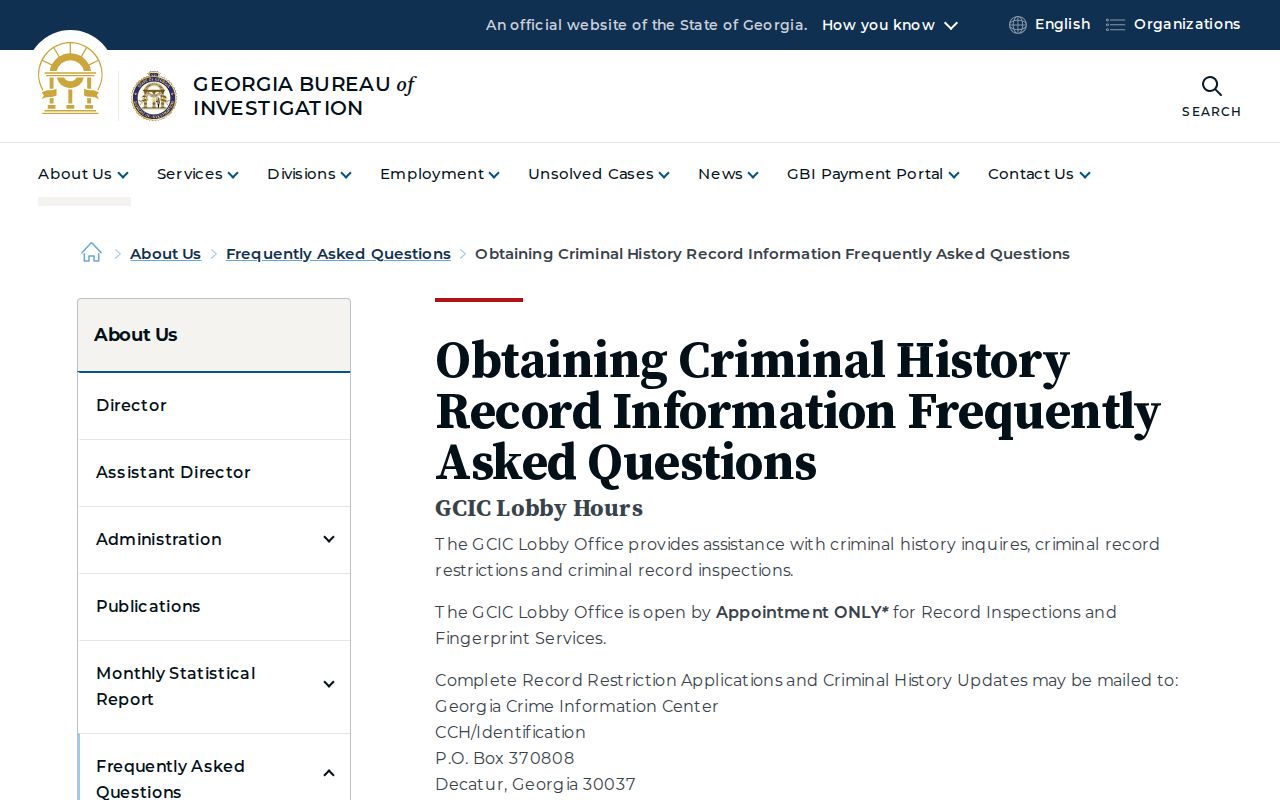
Its limits explain why local jail and court checks still matter in Heard County.
Georgia Felon Search instructions describe the state's public name-based product.
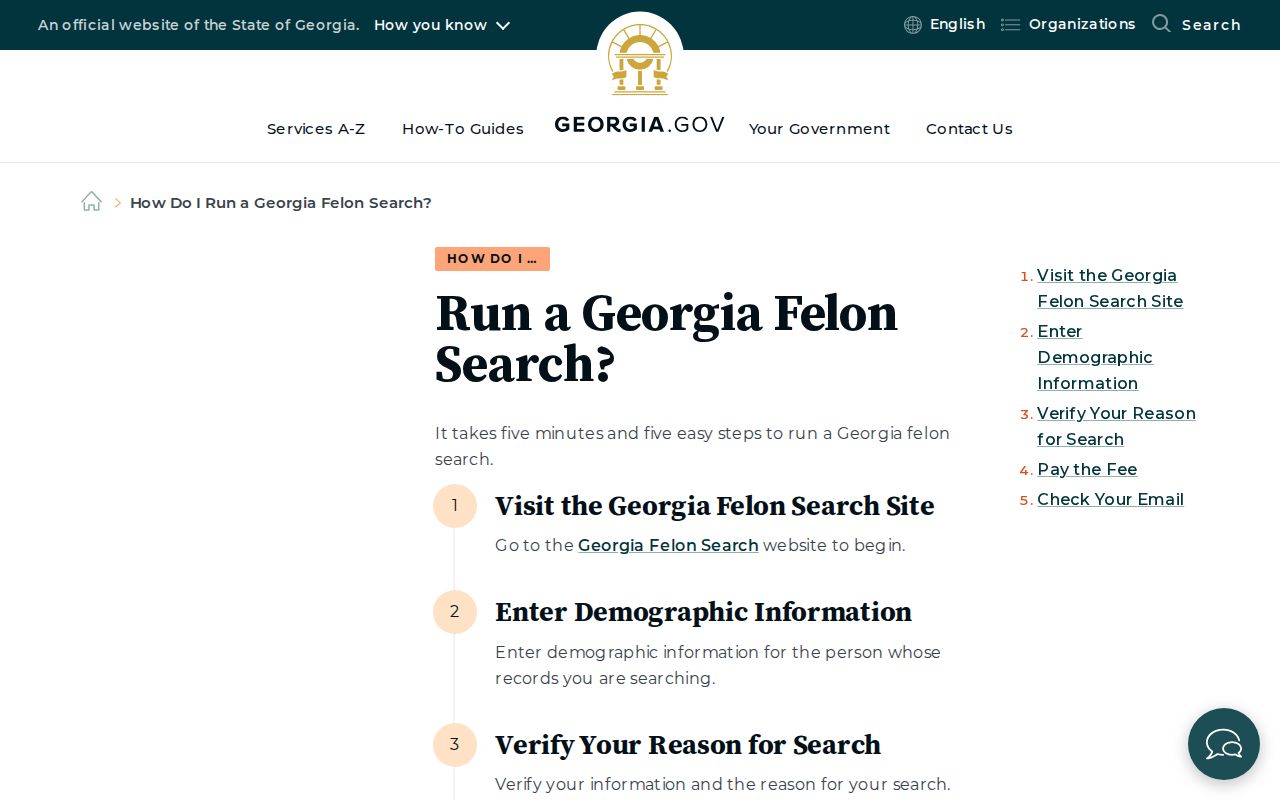
The service covers reported Georgia final felony convictions, not a full arrest history.
The Georgia Felon Search portal charges $15 per search, including no-record results, and possible matches opened can incur another charge.
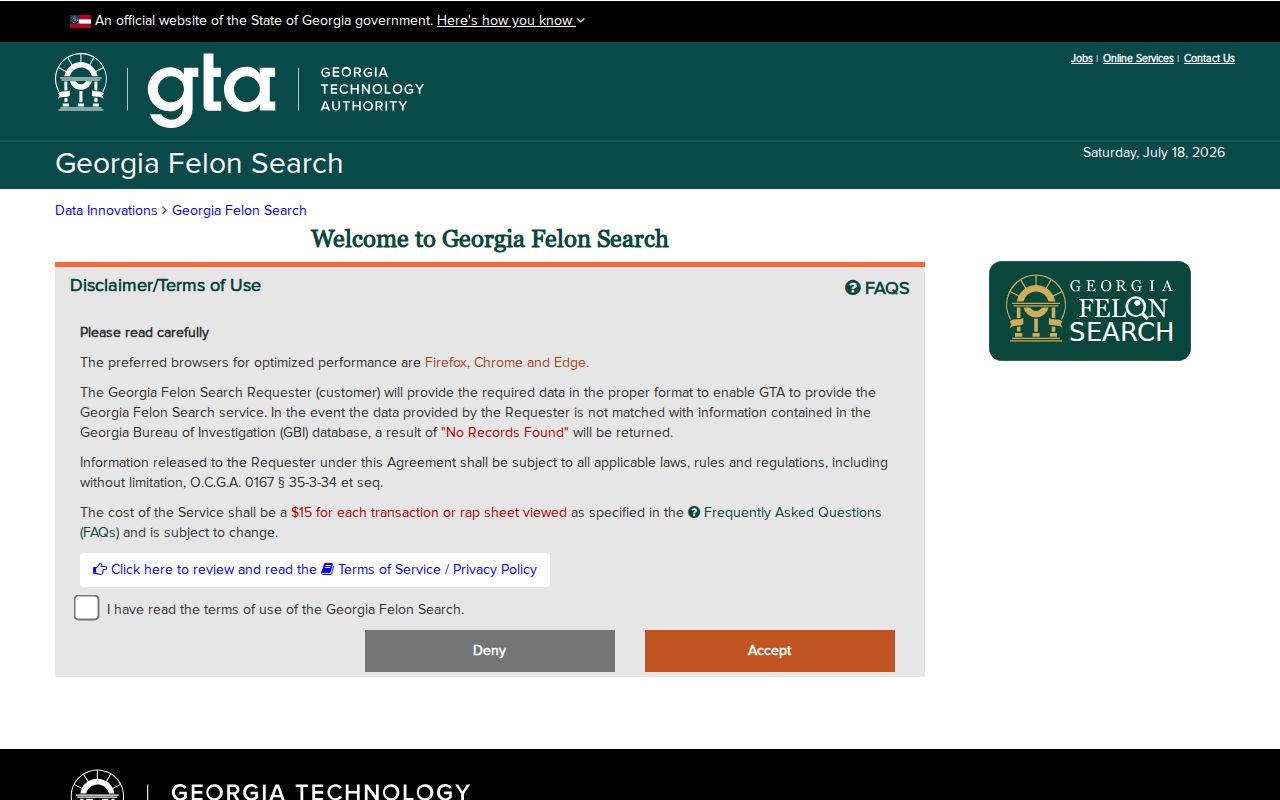
Because it is name-based and limited to final felony convictions, it does not replace fingerprint-based self-review or local records.
For authorized fingerprint processing, enrollment starts through GAPS at IdentoGO.

No verified enrollment site was found inside Heard County, so use the live locator. Personal GCIC record inspection is appointment-only at the GBI facility in Decatur.
Who Owns the Heard Arrest Narrative?
The agency whose officer made the arrest generally holds the narrative. Heard County Sheriff records use the Highway 100 office and its request form. Franklin Police records go through the city's official police channel. Georgia State Patrol material uses Georgia DPS open-records or official crash-report channels. GBI and DNR each keep records their own officers create, subject to applicable exemptions.
| Arresting agency | Record route |
|---|---|
| Heard County Sheriff | Call (706) 675-3329 or submit the HCSO written request. |
| Franklin Police | Use the official Franklin Police records channel and city form. |
| Georgia State Patrol | Identify the post and use Georgia DPS official access channels. |
| GBI | Use the GBI Open Records Unit for eligible GBI-created records. |
| DNR Law Enforcement | Use Georgia DNR's official open-records process. |
Heard Jail owns intake data even when a trooper or city officer made the arrest. Request both products when the booking entry and officer narrative are needed.
The Georgia Open Records Act ordinarily requires a response within three business days. That is a response deadline, not a promise that a large file will be finished in three days. Active investigative supplements, confidential sources, juvenile material, victim details, medical records, and security-sensitive jail information may be withheld or redacted. Initial incident and arrest or booking reports remain key public categories.
Arrest Records vs Conviction Records
An arrest records an officer's action and jail intake based on legal authority and probable cause. A conviction follows a guilty plea or verdict and judgment in court. Charges listed at booking may be reduced, replaced, dismissed, no-billed, or resolved differently by count.
| Arrest record | Conviction record |
|---|---|
| Created by the arresting agency and jail | Created through prosecution and the court |
| Shows that an arrest and booking occurred | Shows a judgment of guilt after plea or verdict |
| Lives with the agency, jail, and GCIC when reported | Lives in the court file and reported state history |
| May end in release, no filing, dismissal, or acquittal | May lead to sentence, appeal, restriction, or other relief |
Note: An arrest is not proof of guilt, and the filed court disposition is the proper source for the case outcome.
A dismissal does not automatically destroy the arrest cycle. Eligible people may seek Georgia record restriction, and a missing disposition may require correction through the clerk, prosecutor, and GCIC channels.